Winter Illnesses – Self-care advice

Common cold

You can often treat a cold without seeing a GP. You should begin to feel better in about 1 to 2 weeks.

Symptoms of a cold

Cold symptoms come on gradually over 2 to 3 days.

The main symptoms include:

  • a blocked or runny nose
  • sneezing
  • a sore throat
  • a hoarse voice
  • a cough
  • feeling tired and unwell

You may also have:

  • a high temperature
  • aching muscles
  • a loss of taste and smell
  • a feeling of pressure in your ears and face

Symptoms of a cold can last longer in young children. They may also be irritable, have difficulty feeding and sleeping, breathe through their mouth, and get sick after coughing.

Telling the difference between cold and flu

Cold and flu symptoms are similar, but flu tends to be more severe.

Difference between cold and flu
Cold Flu

Appears gradually

Appears quickly within a few hours

Affects mainly your nose and throat

Affects more than just your nose and throat

Makes you feel unwell, but you’re OK to carry on as normal (for example, you can normally go to work)

Makes you feel exhausted and too unwell to carry on as normal

How you can treat a cold yourself

You can usually treat a cold at home without seeing a GP.

There are things you can do to help you get better more quickly.

Do

  • get plenty of rest

  • drink lots of fluid, such as water, to avoid dehydration

  • eat healthy food (it’s common for small children to lose their appetite for a few days)

  • gargle salt water to soothe a sore throat (not suitable for children)

  • drink a hot lemon and honey drink to soothe a sore throat

  • breathe in steam to ease a blocked nose – try sitting in the bathroom with a hot shower running

Don’t

  • do not let children breathe in steam from a bowl of hot water because of the risk of scalding

  • do not give aspirin to children under the age of 16

  • do not smoke as it can make your symptoms worse

How to make a hot lemon and honey drink
  1. Squeeze half a lemon into a mug of boiled water
  2. Add 1 to 2 teaspoons of honey
  3. Drink while still warm

Do not give hot drinks to small children.

Do not give honey to children under 12 months old.

If you have a high temperature or do not feel well enough to do your normal activities, try to stay at home and avoid contact with other people until you feel better.

A pharmacist can help with cold medicines

You can buy cough and cold medicines from pharmacies or supermarkets.

A pharmacist can advise you on the best medicine, such as:

You can buy nasal sprays without a prescription, but they should not be used for more than a week as this can make your symptoms worse.

Do not use other cough and cold medicines if you’re also taking paracetamol and ibuprofen tablets as you may take more medicine than you should.

Some cough and cold medicines are also not suitable for babies, children and pregnant women.

There’s little evidence that supplements such as vitamin C, echinacea or garlic prevent colds or help you get better more quickly.

Non-urgent advice:See a GP if:

  • you have a high temperature for more than 3 days
  • your cold symptoms get worse
  • your temperature is very high, or you feel hot, cold or shivery
  • you feel short of breath or have chest pain
  • you’re worried about your child’s cold symptoms
  • your cold symptoms do not get better after 10 days
  • you have a cough for more than 3 weeks
  • you get cold symptoms and you have a long-term medical condition (for example, diabetes, or a heart, lung or kidney condition)
  • you get cold symptoms and you have a weakened immune system (for example, because you’re having chemotherapy)

Information:

GPs do not recommend antibiotics for colds because they will not relieve your symptoms or speed up your recovery.

Antibiotics only work if you have a bacterial infection, but colds are caused by viruses.

How to avoid spreading a cold

Colds are caused by viruses and easily spread to other people.

You’re infectious until all your symptoms have gone. This usually takes 1 to 2 weeks. It can be longer in babies and young children.

Colds are spread by germs from coughs and sneezes, which can live on hands and surfaces for 24 hours.

To reduce the risk of spreading a cold:

  • wash your hands often with warm water and soap
  • use tissues to trap germs when you cough or sneeze
  • bin used tissues as quickly as possible

How to prevent catching a cold

A person with a cold can start spreading it from a few days before their symptoms begin until the symptoms have finished.

The best ways to avoid catching a cold are:

  • washing your hands with warm water and soap
  • not sharing towels or household items (like cups or children’s toys) with someone who has a cold
  • not touching your eyes or nose in case you’ve come into contact with the virus
  • staying fit and healthy

The flu vaccine does not prevent colds.
Cough

A cough will usually clear up on its own within 3 to 4 weeks.

How you can treat a cough yourself

There’s usually no need to see a GP if you have a cough.

You should:

  • rest
  • drink plenty of fluids
  • try to stay at home and avoid contact with other people if you have a high temperature or you do not feel well enough to do your normal activities

You could also try:

  • paracetamol or ibuprofen to treat any pain
  • hot lemon and honey (not suitable for babies under 1 year old)
  • a herbal medicine called pelargonium (suitable for people aged 12 or over)

But there’s limited evidence to show these work. Hot lemon with honey has a similar effect to cough medicines.

How to make a hot lemon and honey drink
  1. Squeeze half a lemon into a mug of boiled water.
  2. Add 1 to 2 teaspoons of honey.
  3. Drink while still warm (do not give hot drinks to small children).

Information:

Some medicines and herbal treatments are not safe for everyone (for example, if you’re pregnant). Always check the leaflet or speak to a pharmacist before taking them.

A pharmacist can help if you have a cough

If you have a cough, you can ask a pharmacist about:

  • cough syrup
  • cough medicine (some cough medicines should not be given to children under 12 years old)
  • cough sweets

These will not stop your cough, but may help you cough less.

Decongestants and cough medicines containing codeine will not stop your cough.

Non-urgent advice:See a GP if:

  • you’ve had a cough for more than 3 weeks (persistent cough)
  • you’re losing weight for no reason
  • you have a weakened immune system – for example, because of chemotherapy or diabetes

Urgent advice:Ask for an urgent GP appointment or get help from NHS 111 if:

  • your cough is very bad or quickly gets worse – for example, you have a hacking cough or cannot stop coughing
  • you feel very unwell
  • you have chest pain
  • the side of your neck feels swollen and painful (swollen glands)
  • you find it hard to breathe
  • you’re coughing up blood

You can call 111 or get help from 111 online.

What happens at your appointment

To find out what’s causing your cough, the GP might:

  • listen to your chest with a stethoscope
  • take a sample of any mucus you might be coughing up
  • order an X-ray, allergy test, or a test to see how well your lungs work
  • refer you to hospital to see a specialist, but this is rare

Important

Antibiotics are not normally prescribed for coughs. A GP will only prescribe them if you need them – for example, if you have a bacterial infection or you’re at risk of complications.

What causes coughs

Most coughs are caused by a cold or flu.

Other causes include:

  • smoking
  • heartburn (acid reflux)
  • allergies – for example, hay fever
  • infections like bronchitis or COVID-19
  • mucus dripping down the throat from the back of the nose

A cough is rarely a sign of something serious like lung cancer.

Flu

Flu

Flu will often get better on its own, but it can make some people seriously ill. It’s important to get the flu vaccine if you’re advised to.

Symptoms of flu

Flu symptoms come on very quickly and can include:

  • a sudden high temperature
  • an aching body
  • feeling tired or exhausted
  • a dry cough
  • a sore throat
  • a headache
  • difficulty sleeping
  • loss of appetite
  • diarrhoea or tummy pain
  • feeling sick and being sick

The symptoms are similar for children, but they can also get pain in their ear and appear less active.

Telling the difference between cold and flu

Cold and flu symptoms are similar, but flu tends to be more severe.

Differences between cold and flu.
Flu Cold
Appears quickly within a few hours Appears gradually
Affects more than just your nose and throat Affects mainly your nose and throat
Makes you feel exhausted and too unwell to carry on as normal Makes you feel unwell, but you still feel well enough to do your normal activities

How to treat flu yourself

If you have flu, there are some things you can do to help get better more quickly.

Do

  • rest and sleep

  • keep warm

  • take paracetamol or ibuprofen to lower your temperature and treat aches and pains

  • give paracetamol or ibuprofen to your child if they’re distressed or uncomfortable – check the packaging or leaflet to make sure the medicine is suitable for your child, or speak to a pharmacist or GP if you’re not sure

  • drink plenty of water to avoid dehydration (your pee should be light yellow or clear)

A pharmacist can help with flu

A pharmacist can give treatment advice and recommend flu remedies.

Do not take paracetamol and flu remedies that contain paracetamol at the same time as it’s easy to take more than the recommended dose.

Information:

Antibiotics

Antibiotics do not work for viral infections such as flu. GPs do not recommend antibiotics for flu because they will not relieve your symptoms or speed up your recovery.

Urgent advice: Ask for an urgent GP appointment or get help from NHS 111 if:

You or your child have symptoms of flu and:

  • you’re worried about your baby’s or child’s symptoms
  • you’re 65 or over
  • you’re pregnant
  • you have a long-term medical condition – for example, diabetes or a condition that affects your heart, lungs, kidneys, brain or nerves
  • you have a weakened immune system – for example, because of chemotherapy or HIV
  • your symptoms do not improve after 7 days

You can call 111 or get help from 111 online.

Immediate action required: Call 999 or go to A&E if you:

  • get sudden chest pain
  • have difficulty breathing
  • start coughing up a lot of blood

Information:

Do not drive to A&E. Ask someone to drive you or call 999 and ask for an ambulance.

Bring any medicines you take with you.

How to avoid spreading the flu

Flu is very infectious and easily spread to other people. You’re more likely to give it to others in the first 5 days.

Flu is spread by germs from coughs and sneezes, which can live on hands and surfaces for 24 hours.

To reduce the risk of spreading flu:

  • wash your hands often with warm water and soap
  • cover your mouth and nose with a tissue when you cough or sneeze (if you do not have a tissue, cough or sneeze into the bend of your elbow, not into your hand)
  • bin used tissues as quickly as possible

Try to stay at home and avoid contact with other people if you have a high temperature or you do not feel well enough to do your normal activities.

Sore throat

Sore throat

Sore throats are very common and usually nothing to worry about. They normally get better by themselves within a week.

How to treat a sore throat yourself

To help soothe a sore throat and shorten how long it lasts, you can:

  • gargle with warm, salty water (children should not try this)
  • drink plenty of water
  • eat cool or soft foods
  • avoid smoking or smoky places
  • suck ice cubes, ice lollies or hard sweets – but do not give young children anything small and hard to suck because of the risk of choking
  • rest
How to gargle with salt water
  1. Dissolve half a teaspoon of salt in a glass of warm water (warm water helps salt dissolve).
  2. Gargle with the solution, then spit it out (do not swallow it).

Video: how to treat a sore throat

This video shows you how to treat a sore throat.

Media last reviewed: 14 July 2023
Media review due: 14 July 2026

Treatments that may help a sore throat

You can ask a pharmacist about ways of relieving the pain and discomfort of a sore throat, such as:

  • paracetamol or ibuprofen
  • medicated lozenges containing a local anaesthetic, antiseptic, or anti-inflammatory medicine
  • anaesthetic spray (although there’s little proof they help when used on their own)

You can buy these treatments from a supermarket or pharmacy without a prescription.

Some medicines are not safe for everyone (for example, if you’re pregnant). Always check the leaflet or speak to a pharmacist before taking them.

Antibiotics

You do not normally need antibiotics for a sore throat because they will not usually relieve your symptoms or speed up your recovery.

You’ll only be given antibiotics by a pharmacist or GP if you could have a bacterial infection.

Non-urgent advice: See a pharmacist if:

  • you need help for a sore throat
  • your child is aged 5 years or over and needs help for a sore throat

A pharmacist can give the same antibiotic treatment as a GP for a sore throat, if you need it. They can also give advice or direct you to other medical help.

Non-urgent advice: See a GP if:

  • your child aged under 5 years needs help for a sore throat
  • you or your child’s sore throat does not improve after a week
  • you often get a sore throat
  • you have a sore throat and symptoms like a lump in your mouth or neck, or a mouth ulcer that lasts for more than 3 weeks

Urgent advice: Ask for an urgent GP appointment or get advice from 111 now if:

You or your child have a sore throat and:

  • you’re worried about your symptoms
  • you have a very high temperature, or you feel hot, cold or shivery
  • you have signs of dehydration, such as peeing less than usual or dark, strong-smelling pee
  • you have a weakened immune system – for example, because of diabetes or chemotherapy

You can call 111 or get help from 111 online.

Immediate action required: Call 999 or go to A&E now if:

You or your child:

  • have difficulty breathing or are unable to swallow
  • are drooling – this can be a sign of not being able to swallow
  • are making a high-pitched sound as you breathe (called stridor)
  • have severe symptoms and are getting worse quickly

Information:

Do not drive to A&E. Ask someone to drive you or call 999 and ask for an ambulance.

Bring any medicines you take with you.

Sore throat symptoms

If you have a sore throat you might have:

  • a painful throat, especially when swallowing
  • a dry, scratchy throat
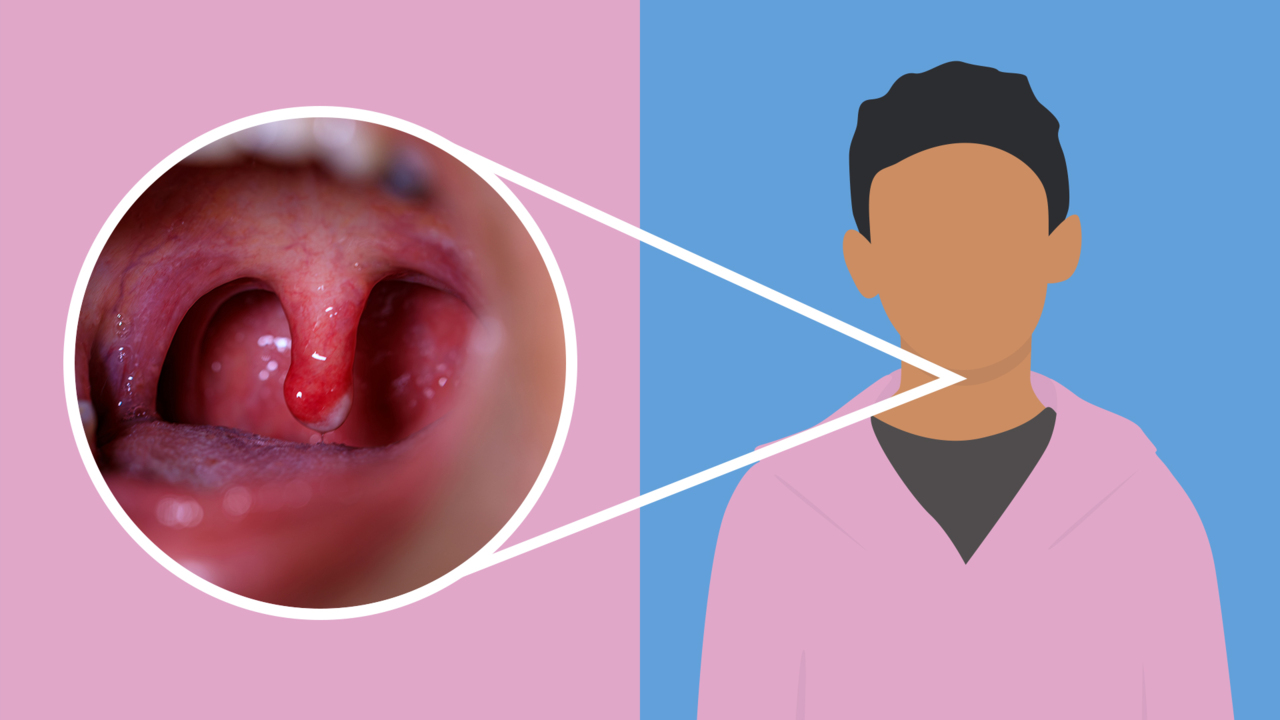
  • redness in the back of your mouth
  • bad breath
  • a mild cough
  • swollen neck glands

The symptoms are similar for children, but children can also get a high temperature and appear less active.

Fever in Children

High temperature (fever) in children

A high temperature (fever) is very common in young children. The temperature usually returns to normal within 1 to 4 days.

Checking a high temperature

A normal temperature in babies and children can vary slightly from child to child.

A high temperature is 38C or more.

If your child has a high temperature, they might:

  • feel hotter than usual when you touch their back or chest
  • feel sweaty
  • look or feel unwell
  • have a seizure or fit, called a febrile seizure

Use a digital thermometer, which you can buy from pharmacies and supermarkets, to take your child’s temperature.

How to take your child’s temperature
  1. Place the thermometer inside the top of the armpit.
  2. Gently close the arm over the thermometer and keep it pressed to the side of the body.
  3. Leave the thermometer in place for as long as it says in the instruction leaflet. Some digital thermometers beep when they’re ready.
  4. Remove the thermometer. The display will show your child’s temperature.

If your child has just had a bath or been wrapped in a blanket, their temperature may be higher for a short time. Wait a few minutes then try again.

What to do if your child has a high temperature

If your child or baby has a high temperature, you can usually look after them at home. The temperature should go down over 1 to 4 days.

Do

  • give them plenty of fluids – if your baby is breastfed, continue to breastfeed as normal

  • look out for signs of dehydration

  • give them food if they want it

  • check on your child regularly, including during the night

  • keep them at home

  • give them either paracetamol or ibuprofen if they’re distressed or uncomfortable – check the packaging or leaflet to make sure the medicine is suitable for your child, or speak to a pharmacist or GP if you’re not sure

  • get medical advice if you’re worried about your child, or if the paracetamol or ibuprofen is not helping

Don’t

  • do not undress your child or sponge them down to cool them – a high temperature is a natural and healthy response to infection

  • do not cover them up in too many clothes or bedclothes

  • do not give aspirin to children under 16 years of age

  • do not alternate ibuprofen and paracetamol, unless a health professional such as a doctor or nurse tells you to

  • do not give paracetamol to a child under 2 months

  • do not give ibuprofen to a child who is under 3 months, weighs under 5kg, has chickenpox, or is dehydrated

  • do not give ibuprofen to children with asthma unless it’s been recommended by a doctor

Read more about giving medicines to babies and children

Urgent advice:Call 111 or your GP surgery now if your child:

  • is under 3 months old and has a temperature of 38C or higher, or you think they have a high temperature
  • is 3 to 6 months old and has a temperature of 39C or higher, or you think they have a high temperature
  • has other signs of illness, such as a rash, as well as a high temperature
  • has a high temperature that’s lasted for 5 days or more
  • does not want to eat, or is not their usual self and you’re worried
  • is dehydrated – such as nappies that are not very wet, sunken eyes, and no tears when they’re crying

Immediate action required:Call 999 if your child:

  • has a stiff neck
  • has a rash that does not fade when you press a glass against it
  • is bothered by light
  • has a fit (febrile seizure) for the first time (they cannot stop shaking)
  • has unusually cold hands and feet
  • has changes to their skin colour such as blue, grey, paler than usual or blotchy skin (this may be harder to see on brown or black skin), or blue, grey or paler than usual lips or tongue
  • is drowsy and hard to wake
  • is extremely agitated (does not stop crying) or is confused
  • has difficulty breathing (you may notice grunting noises or their stomach sucking under their ribcage), breathlessness or breathing very fast
  • is not responding like they normally do, or is not interested in feeding or normal activities

Causes of a high temperature in children

A high temperature is the body’s natural response to fighting infections like coughs and colds.

Many things can cause a high temperature in children, from common childhood illnesses like chickenpox and tonsillitis, to vaccinations.